“Bank Over Belief”: The Black Faces Behind the Billion-Dollar Jail Plan in New Chicago
In the heart of North Memphis, where the echoes of Manassas High School’s legacy still reverberate through the streets, a billion-dollar storm brews. The proposed $1.26 billion Shelby County Justice Center—spearheaded by wealthy white developer Kemp Conrad—isn’t just a construction project. It’s a cultural flashpoint, a test of loyalty, and a mirror reflecting the long-standing tradition of Black clergy being used as political cover for white profiteering.
*The Site of Controversy: New Chicago’s Historic Soul*
New Chicago isn’t just any neighborhood. It’s a historically Black residential community, home to generations of families, churches, and institutions that have weathered decades of disinvestment. The proposed jail complex would sit on the former Firestone plant site, just blocks from Manassas High School, built in 1899—the first high school for African Americans outside of Memphis in Shelby County. To many residents, the jail plan feels like a final insult: replacing legacy with incarceration.
*Community Pushback: “No Jail in New Chicago”*
The resistance is fierce. Residents like Carnita Atwater and Ronald Anderson have led protests, demanding that the county reject the plan. “This is our haven,” Anderson declared. “They cannot show injustice to us.” Atwater warned county commissioners that the community is prepared to take the fight to the Supreme Court if necessary."
And yet, amid this groundswell of opposition, a few prominent Black voices have emerged—not in protest, but in support.
---
Blacks Who Endorsed the New Chicago Jail Plan are Preachers
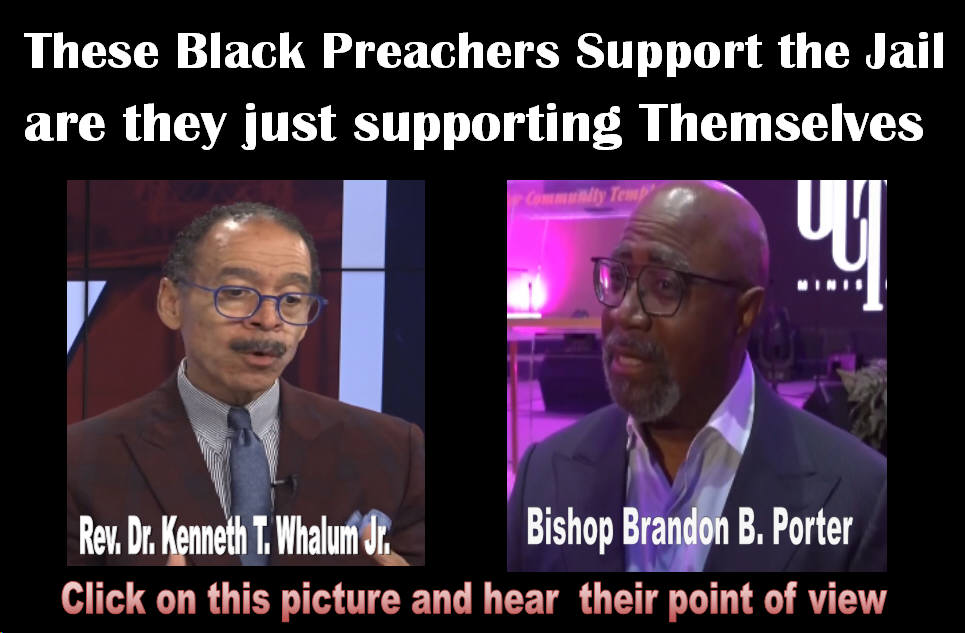
Rev. Dr. Kenneth Whalum: From Orange Mound to Cordova.
Rev. Kenneth Whalum, once rooted in the historic Orange Mound community, relocated his Olivet Baptist Church to the upscale suburb of Cordova. From this new perch, he’s lent his voice to the jail proposal, calling criminal justice “a growth industry whether we like it or not.” Black Female Attorney Linda Harris Nettles Harris says the legal and ill-legal drug industry is a growth industry are we pushing for that in our Black Community.
Dr. Reve Kennth Whalum framing of the jail as a financial opportunity whereas it will create a “Bank,” as he put it—has drawn sharp criticism from activists who see his support as a betrayal of the community’s values and history.
Bishop Brandon Porter: “Vitality” Through Incarceration?
Bishop Porter echoed similar sentiments, claiming the jail complex would bring “vitality,” investors, and economic spinoffs. He cited assurances from developers that the project would create jobs and attract businesses. But critics argue that this vision is a mirage—one that ignores the trauma and stigma a jail brings to a residential neighborhood.
Beyond the Pulpit: Other Black Supporters
While ministers have taken center stage, whispers swirl about other Black leaders—politicians, consultants, and influencers—who’ve quietly backed the plan. Many don’t live in New Chicago. Some have ties to real estate, county contracts, or political ambitions. Their support often comes wrapped in vague promises of “revitalization,” “public safety,” or “economic development”—terms that rarely translate into tangible benefits for the people who actually live there.
Notably, no minister with a church physically located in New Chicago has publicly supported the jail. That silence speaks volumes.
The Strategy: Divide and Conquer
This isn’t new. Historically, white developers and politicians have used Black clergy as intermediaries to sell controversial plans to Black communities. It’s a textbook strategy—one rooted in respectability politics, backroom deals, and the optics of racial inclusion. The ministers become the face of the plan, while the community bears the consequences.
In New Chicago, that playbook is being dusted off once again. But this time, the community is pushing back—with clarity, unity, and historical memory.
The Bigger Question: Who Benefits
Kemp Conrad, a former Memphis city councilman and conservative Republican, argues that the jail will catalyze development. But critics say the real beneficiaries are developers, contractors, and political insiders—not the residents of New Chicago. The plan would displace families, stigmatize the neighborhood, and deepen the cycle of incarceration.
The question remains: Why are Black leaders who don’t live in New Chicago—and who won’t bear the brunt of the jail’s impact—so eager to support it?
Conclusion: Selling Out or Standing Up
The story of New Chicago is still unfolding. But one thing is clear: the community is not fooled by promises of “vitality” or “growth.” They see the jail for what it is—a billion-dollar monument to systemic neglect, dressed up as progress.